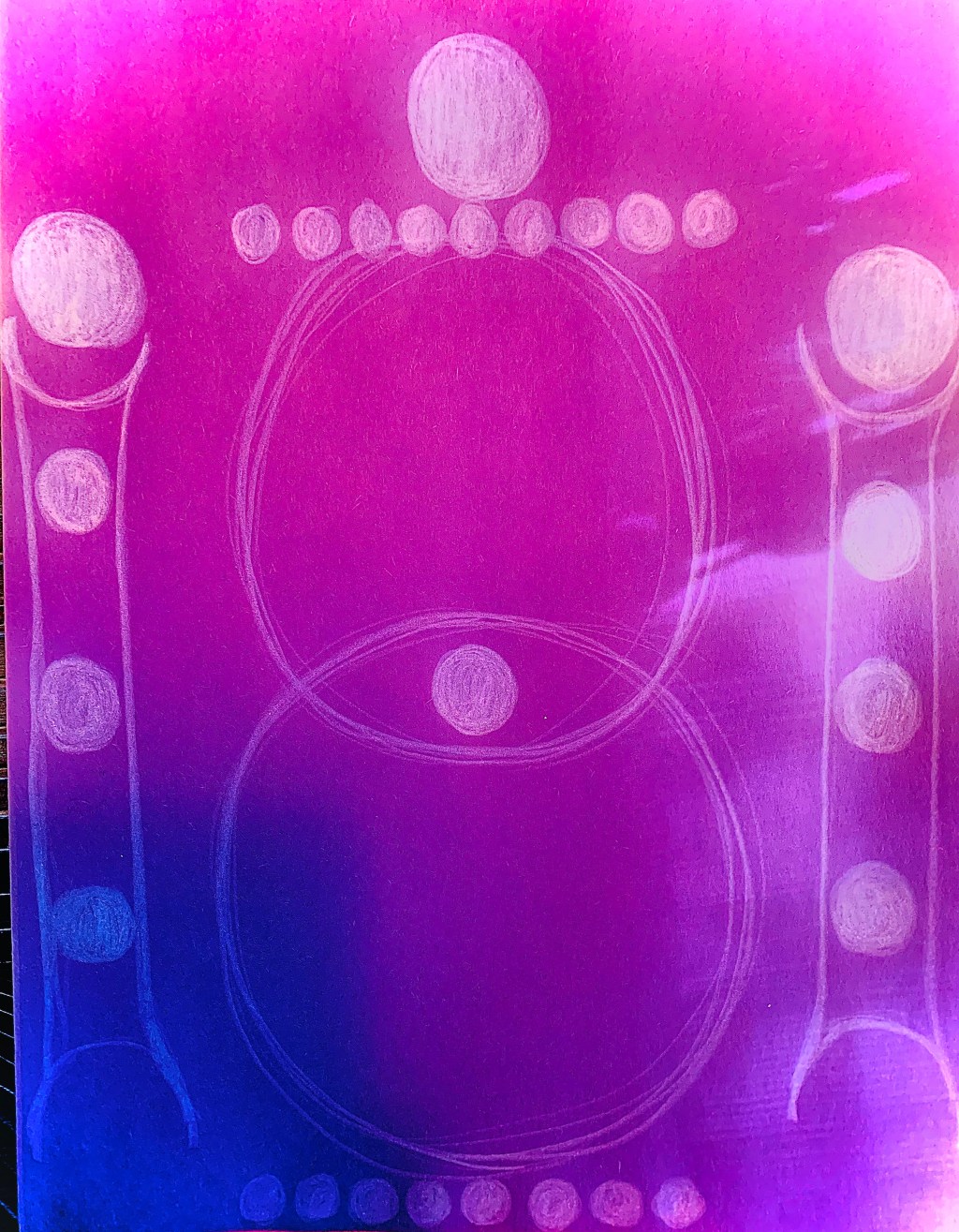
In contemplating “expansion” it reminded me of the other dualitude used in the idiom of alchemy “separation and coagulation.” I think by tracing patterns of separation and coagulation in Surah 12 we can also see patterns of expansion and contraction in Joseph’s wayfaring.
- When Jospeh receives the inspirited dream which announces a movement or separation from the family we see the first expansion in the tale. In Ibn Arabi the blowing of the horn of Israfil is a powerful symbol of how the gale or winds of the Spirit arrives to change the configuration of earthly matter. When the gale of Israfil or the breath of Rahman arrives it fans the fires of inspiration and sometimes as in the case of Joseph’s dream it is so powerful that it begins a process that is no longer able to occur within the confines of Jacob’s house. I see this as the extraction of the ores from the mine to use alchemical terms, Jospeh is extracted out of the earthly home due to the growing intensity of the Spirit and its necessity to develop further in a new ambient nutritive environment and to accomplish its destiny in the world. We could see this as moving from the milk of the earthly mother to the milk of knowledge. And of course the grief which Jacob experiences after hearing of the dream is due to the certainty of this annunciation, this expansion, and yet he tries to have Jospeh (or the rest of the family in the house) shielded from this necessity by begging him to be silent. At first Jospeh is separated from his father and then soon after he is separated from his brothers, so degrees of separation al-rafi, until finally he is separated entirely from humanity and the world by descending into the well or pit, the contraction that accompanies the expansion of the dream. The solitude of the pit (pray, work, and be silent) though while being a contraction regarding his participation in the family becomes an expansion of the Spirit as Joseph begins the next stage of his development in a new environment.
- It is possible we are looking at Joseph moving through the spheres in the tale. We know that when a wayfarer reaches the threshold of one sphere to move into the next there is a fana or annihilation of the previous elemental command, the elemental configuration of the previous world and a reconfiguration to allow the entry and participation in the next. Joseph’s betrayal by his brothers, the descent into the pit, his period of slavery in a strange household, and then later the prison suggest these threshold periods during which the previous world’s elements are shed and a new body is configured for continued wayfaring. Separation and coagulation happening in stages as this process continues. As he grows in radiance his body must be updated to hold the fulness of his being. From a developmental model of prophecy we are watching the prophet grow into his fulness as he moves through the spheres reclaiming his true heritage. This is why his brothers do not recognize him later in the story, he is not just older, he is different. “This is no mortal man. This is naught but a noble angel.” In Chittick’s The Sufi Path of Knowledge he describes that while we are fixed in our world to the relationship to the jabarut, malakut, barzakh, and mulk we are not fixed to the ratios of which they are expressed in our being. So a person may become more sprit based, brighter at certain part of his wayfaring, or may be come more watery and aqueous or changeable, our may become more solid or heavy like a treasure chest at specific phases depending on what is called for.
- The two kings and the reception in the spheres by the advocate: In chapter 15 book 3 of The Futuhat Ibn Arabi lists the advocates of each sphere. In Surah 12 I believe we can see Jospeh received by two kings, first the head of the household where he is a slave, and second the pharaoh that gives him the throne. At different places the title Malik is given to each, showing the way in which a wayfarer is received by the advocate of the sphere if they successfully enter and travel to the center of that world, become embraced by its elemental command. Traditionally there is an angel that assists in this process who hands the wayfarer off from the threshold of the previous world to the center of the next. This angel wraps the wayfarer in its wings to shield them during the fana period. The “household” in which he is enslaved could fulfill this role or even Zulaikha, who like Jacob has a hard time letting Jospeh go when they witness the necessity of his spirit to travel on so they attempt to stop him, one by asking him to be silent, the other by locking him in a room. So we see a coagulation at the center of each sphere and then due to the intensity of his Spirit a movement again towards separation in order to move to the next stage of development by degrees, Al-Rafi. So as Jospeh is raised by degrees it appears he is sinking at certain moments but these moments of apparent contraction are part of his ascension, expansion.
- Who grieves? Is it the grief of the world or sphere that looses the traveling prophet that grieves? Has our world ever stopped grieving for their lost prophets? But there are traditions that say they have not died and Ibn Arabi by placing a prophet in each sphere is showing this tradition and expanding it by giving us a place to be with them, as the spheres are in our bodies. In this case Joseph is the advocate of Venus, which I associate with the solar plexus, following logically if Enoch is in the heart as the advocate of the Sun. I realize it is natural to exteriorize the spheres when you hear about them but they are knowable only because you contain them inside of you and Jospeh’s story is only knowable because it is your story.
 Illuminist Lodge
Leave a comment